
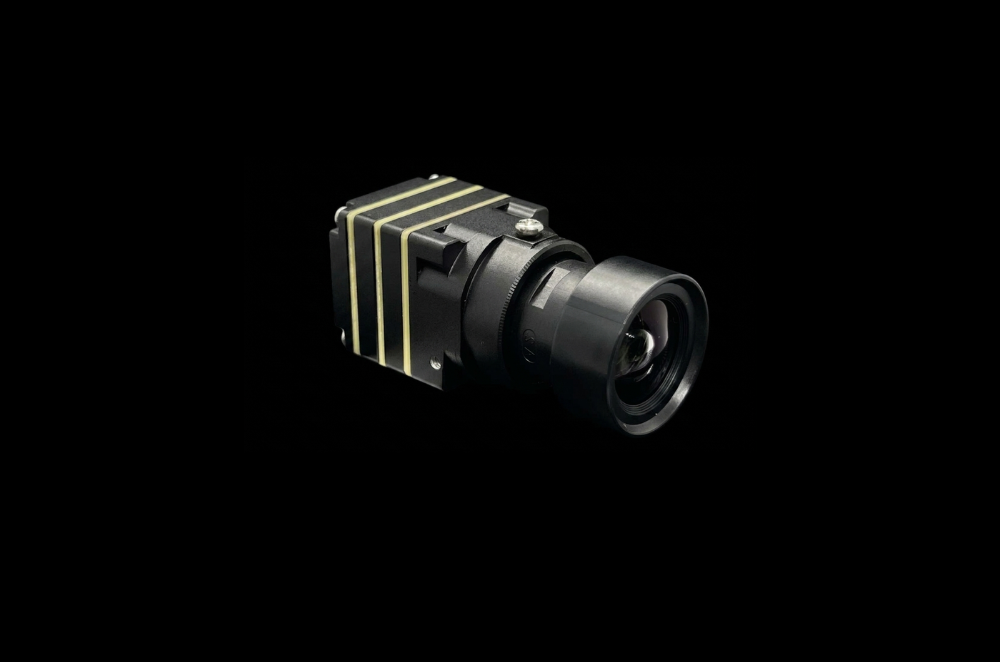
Ultra Low Light MIPI Camera
0.0004 lx min. illumination (B/W), 5 mm medium-range lens, 4-Lane MIPI CSI-2, ≤ 30 g night vision module.
Medium-Range Ultra Low Light MIPI Camera Module
What It Is
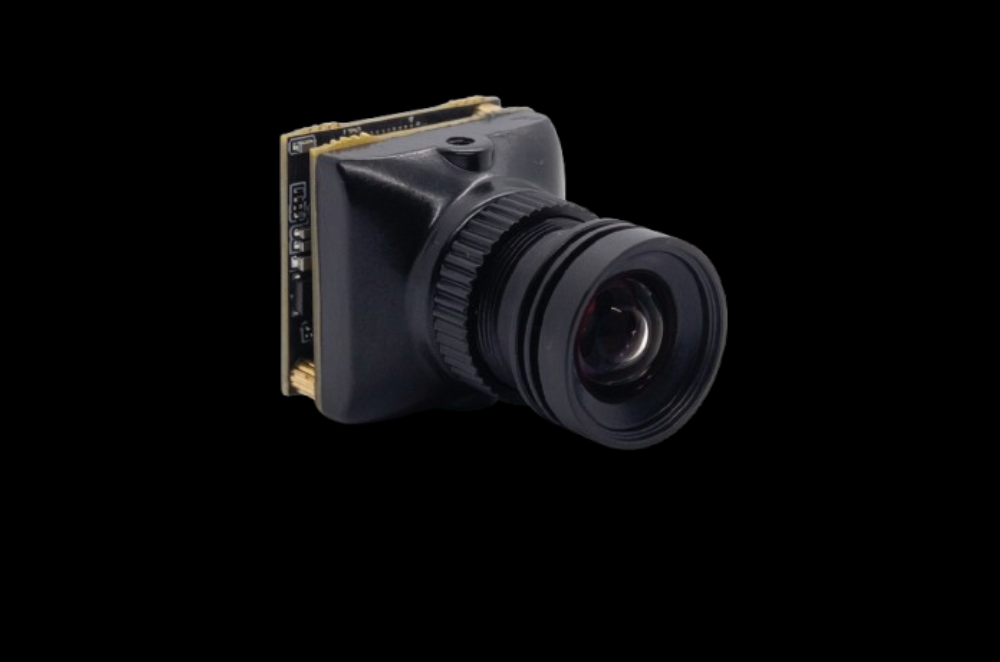
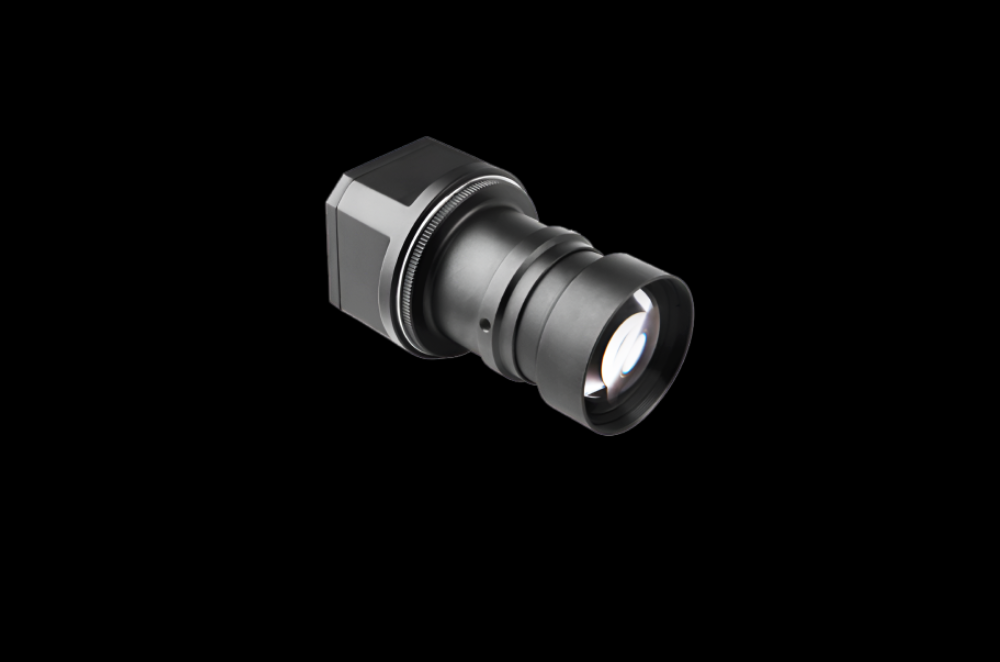
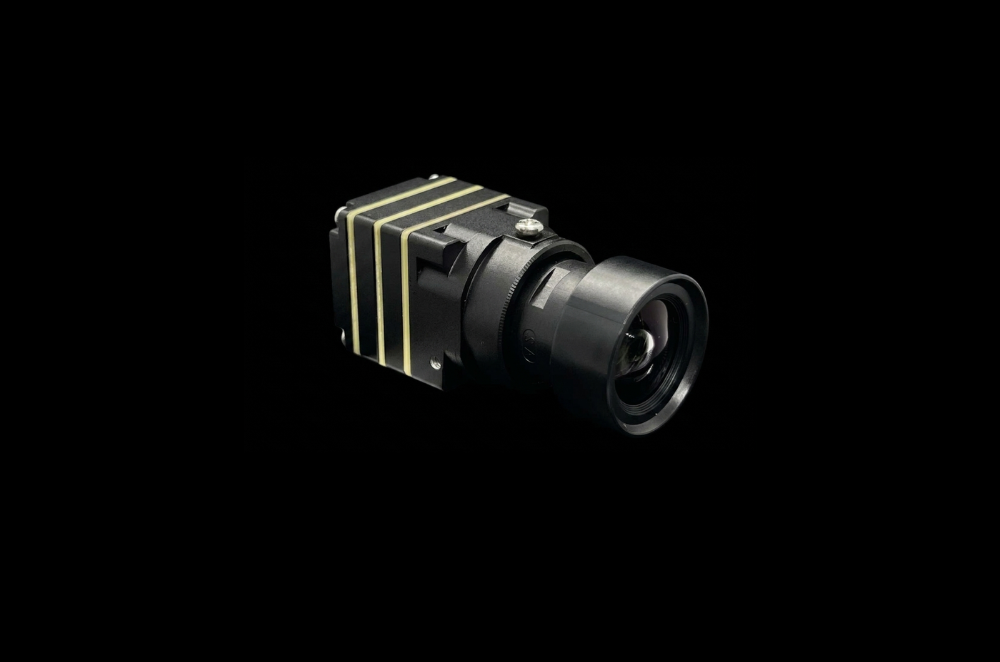
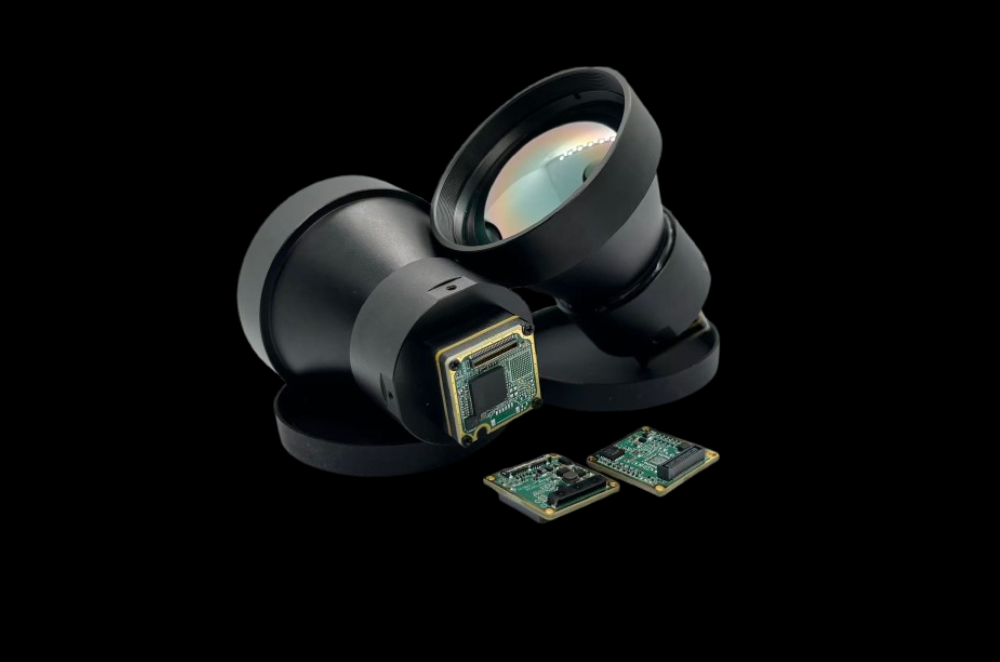
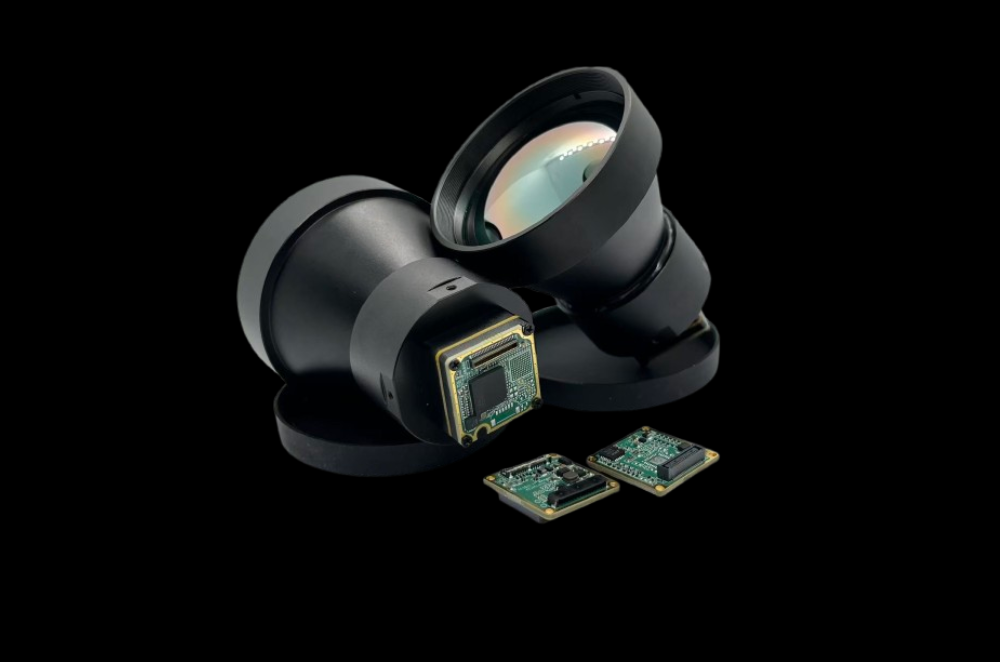
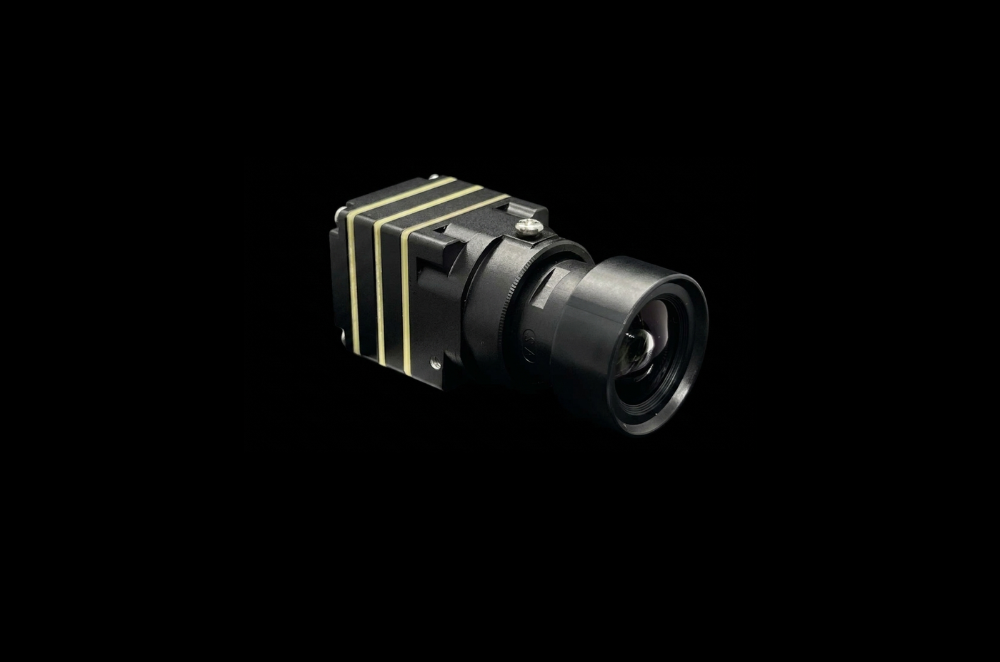
The XHC1602-L20M516 is an ultra low light MIPI CSI-2 camera module based on a back-side illuminated CMOS sensor with a 5 mm focal-length M16 lens, classified as a bare embedded OEM module for direct SoC and FPGA integration in drone payloads, robotics, and tactical surveillance systems requiring medium-range starlight-class imaging without active illumination.
Performance
The module achieves a minimum illumination of 0.0004 lux (B/W, 15fps) and 0.001 lux (colour, 30fps), with detection performance of 800 m on a 1.7 m × 0.5 m person target and 4250 m on a 3 m × 9 m vehicle target under NVESD standard conditions (clear weather, visibility ≥ 10 km). Default dynamic range is 72 dB with WDR upgrade capability. Power consumption is 1.2 W at 25fps with a startup time of approximately 2 seconds.
Key Technical Features
- 4-Lane MIPI CSI-2 output in YUV422 8-bit format with internal and two external synchronisation modes for multi-camera array deployment.
- UART control interface at 115200 bps for full ISP parameter access including exposure, gain, 3D noise reduction, WDR mode, and image flip.
- BSI CMOS sensor architecture with rolling shutter and automatic gain control rated to sub-millilux sensitivity in monochrome mode.
- M16 lens interface supporting 4 mm, 5 mm, and 8 mm focal length variants for range-specific applications.
Platform Compatibility
The XHC1602-L20M516 is suited for integration with SoC and FPGA platforms supporting MIPI CSI-2 D-PHY, spanning drone onboard vision systems, loitering munition observation modules, robotics and autonomous navigation platforms, multi-sensor fusion hosts, and fixed or vehicle-mounted border surveillance systems; all installations require impedance-controlled PCB routing and external environmental housing.
BSI Ultra Low Light Sensor
The module uses a back-side illuminated CMOS sensor to maximise photon collection efficiency, achieving sub-millilux sensitivity in monochrome mode and colour night vision under natural starlight and moonlight conditions. No active illumination source is required for full-frame imaging.
NVESD-Standard DRI Performance
Detection, recognition, and identification ranges are calculated to the US military NVESD standard under clear weather conditions with visibility ≥ 10 km, providing a consistent, comparable performance baseline. Person detection reaches 800 m and vehicle detection reaches 4250 m.
MIPI CSI-2 Multi-Camera Synchronisation
The 4-Lane MIPI CSI-2 interface supports internal sync and two external sync modes, enabling deterministic multi-camera array alignment on SoC and FPGA platforms. This is essential for stereo vision, panoramic arrays, and sensor fusion pipelines requiring inter-frame coherence.
Runtime ISP Parameter Control
All image processing parameters including exposure, gain, contrast, brightness, gamma, 3D noise reduction, WDR mode, and image flip are accessible at runtime via UART at 115200 bps. Operators and host systems can adapt imaging parameters in real time to changing scene conditions without firmware updates.
Our technical team provides pre-sales support for system integration planning, field testing, and deployment assessment.
Contact Technical TeamFull Technical Specifications
| Parameter | Specification |
|---|---|
| GENERAL | |
| Model Number | XHC1602-L20M516C/B |
| Product Series | XHC1602-L20M Series |
| Product Type | Ultra Low Light MIPI Camera Module |
| OPTICAL | |
| Sensor Type | CMOS (EO/Ultra Low Light) — XHI1302C/B BSI |
| Resolution | 1280 × 1024 |
| Colour Mode | Colour / Monochrome (switchable) |
| Focal Length | 5 mm |
| Aperture (F-number) | F1.0 |
| FOV Horizontal | 78° |
| FOV Vertical | 62° |
| PERFORMANCE | |
| Min. Illumination (B/W) | 0.0004 lx B/W @ 15fps |
| Frame Rate | 15 / 25 / 30 / 50 / 60 / 90 fps |
| Dynamic Range | 72 dB (WDR upgradeable) |
| Shutter Type | Rolling Shutter |
| MECHANICAL | |
| Weight | ≤ 30 g |
| Lens Interface | M16 Lens Interface |
| ELECTRICAL | |
| Operating Voltage | DC 5V (4.8–5.2V) |
| Power Consumption | 1.2 W @ 25fps |
| ENVIRONMENTAL | |
| Operating Temperature | −40 °C to +60 °C |
| Storage Temperature | −50 °C to +70 °C |
| FEATURES | |
| Wide Dynamic Range | Default 72 dB; multi-mode WDR upgradeable |
| Noise Reduction | 3D Noise Reduction |
| Image Flip / Mirror | Image Flip / Mirror supported |
| DRI PERFORMANCE | |
| DRI Test Standard | Clear weather, visibility ≥ 10 km, US military NVESD standard |
| DRI Target Basis (Person) | 1.7 m × 0.5 m |
| DRI Target Basis (Vehicle/Tank) | 3 m × 9 m |
| Detection Range (Vehicle/Tank) | ≥ 4250 m |
| Recognition Range (Vehicle/Tank) | ≥ 1060 m |
| Identification Range (Vehicle/Tank) | ≥ 660 m |
| Detection Range (Person) | ≥ 800 m |
| Recognition Range (Person) | ≥ 200 m |
| Identification Range (Person) | ≥ 125 m |
| INTERFACE | |
| Output Format | 4-Lane MIPI CSI-2 YUV422 8-bit |
| Control Interface | UART 115200 bps |
| Synchronisation | Internal sync; 2 external sync modes |
Designed for the Field
Drone and Loitering Munition Payloads
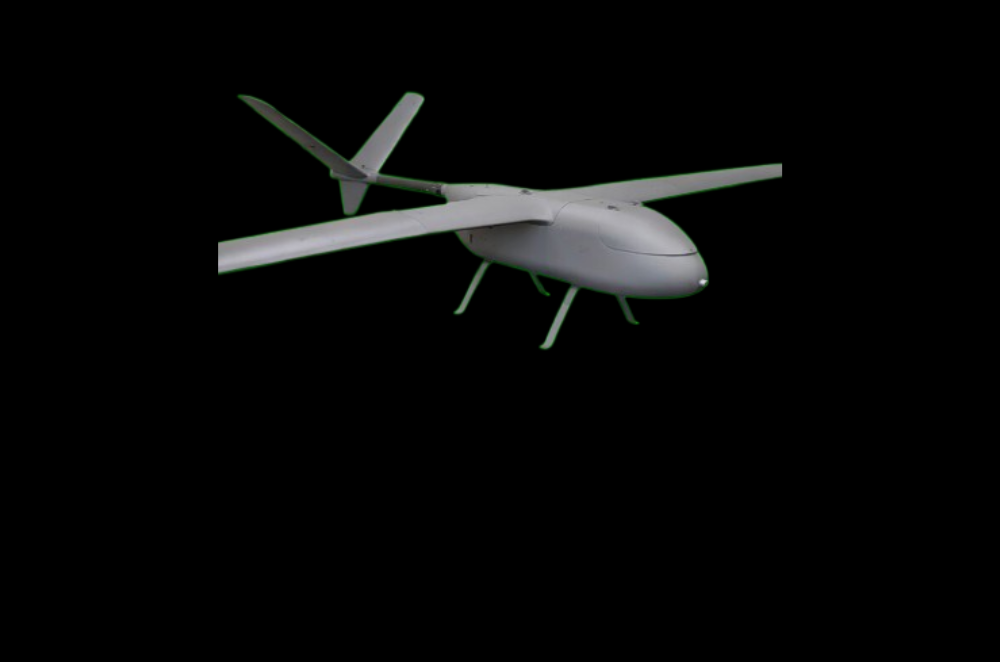
The 5 mm lens provides medium-range coverage suited for drone observation modules and loitering munition payloads requiring person and vehicle detection at tactically relevant distances.
Tactical and Border Surveillance
Passive night imaging at 800 m person range enables fixed and mobile border security nodes without active illumination.
Embedded Vision OEM Integration
Direct MIPI CSI-2 SoC and FPGA integration for robotics, autonomous vehicles, and multi-camera synchronisation rigs.
Drone and Loitering Munition Payloads
The XHC1602-L20M516 is engineered as the primary EO sensor for medium-range drone observation and loitering munition platforms that require passive night imaging at person and vehicle detection ranges. Vehicle detection at 4250 m and person detection at 800 m, both under NVESD standard conditions, provide the range performance required for tactical target acquisition from airborne platforms operating in no-illumination environments.
- Detection Range (Person): ≥ 800 m
- Detection Range (Vehicle): ≥ 4250 m
- Min. Illumination: 0.0004 lx B/W @ 15fps
- Weight: ≤ 30 g
Tactical and Border Surveillance
Passive night imaging at person detection range of 800 m supports border crossing, perimeter fence, and critical infrastructure surveillance nodes without any active illumination signature. The 1.2 W power consumption and −40 °C operating floor enable deployment in harsh remote environments using standard 5V embedded power supplies with minimal thermal management.
- Detection Range (Person): ≥ 800 m
- Recognition Range (Person): ≥ 200 m
- Power Consumption: 1.2 W @ 25fps
- Operating Temperature: −40 °C to +60 °C
Robotics and Multi-Camera OEM Integration
The 4-Lane MIPI CSI-2 interface with external synchronisation makes the 516 variant directly integrable with SoC and FPGA platforms in autonomous ground vehicles, inspection robots, and multi-camera rigs requiring coherent frame capture across sensor arrays. All ISP parameters are software-tunable via UART, allowing host-side adaptation of sensitivity, noise reduction, and dynamic range without hardware changes.
- Output Format: 4-Lane MIPI CSI-2 YUV422 8-bit
- Sync Modes: Internal + 2 external sync modes
- Control: UART 115200 bps
- Resolution: 1280 × 1024 default
System Integration
Interface Architecture
The XHC1602-L20M516 exposes a 4-Lane MIPI CSI-2 primary video output and a UART ISP control bus, forming a two-bus integration architecture optimised for embedded SoC and FPGA hosts.
Full pinout, D-PHY electrical specification, and ISP register map are available to registered corporate integrators.
MIPI CSI-2 Interface
The module outputs 4-Lane MIPI CSI-2 YUV422 8-bit video to the host SoC or FPGA platform, with support for internal sync and two configurable external sync modes to enable multi-camera arrays. The host must provide MIPI CSI-2 D-PHY receiver with 4-lane support; impedance-controlled PCB routing is required for signal integrity.
Documentation & Downloads
Public documents are available below. Additional corporate-restricted documents require a verified account. Export-controlled items require end-user certification.
3 Documents Restricted to Corporate Customers
Firmware packages, SDK archives, CAD drawings, and classified technical manuals require a verified corporate account. Apply for access and an account manager will review your registration within 1–2 business days.
Request a Quote or Demo Unit
Our technical sales team can arrange a field demonstration, provide deployment planning, and prepare a formal quotation for your procurement requirements.
Contact Sales TeamSign In to Your Account
Access restricted integration resources and downloadable documentation for verified corporate customers.
Don't have an account? Apply for corporate access →
Apply for Corporate Access
Complete the form below. Your application will be reviewed within 1–2 business days. A corporate email address is required — free webmail addresses are not accepted.
Already have an account? Sign in here →